Measurement is an essential part of any organization’s drive to achieve palpable impacts from the programs they run. Hence, we help governments, companies, and international organizations to assess the results of their programs across a wide spectrum of areas and to detect the challenges they face in their operations in order to grasp opportunities for improvement.
Monitoring and Evaluation Services
Program Monitoring
Program Evaluation
Data Quality Review
Impact Evaluation and Assessment
We conduct Program Monitoring to learn from experience, to increase internal and external accountability of performance, to make informed decisions, and to maximize project performance.
This serves as a means of checking how the action plan’s implementation is progressing. Program Evaluation looks at the relevance, effectiveness, efficiency, impact, and sustainability of the given intervention.
Our methods include quantitative and qualitative analysis, randomized pre- and post-test evaluation, experimental and quasi-experimental design, ex-post comparison, and rapid assessment ex-post impact evaluations. Services range from small-scale rapid assessment and participatory appraisals to large-scale sample surveys.
Meanwhile, Data Quality Review is a key element of any smoothly functioning monitoring and evaluation system. Indeed, monitoring and evaluation data represent an important source of information to ascertain the extent of progress being made and also providing support to project managers in their decision making. Ensuring that data are of a high quality is essential to maintain confidence in decisions made.
Our data quality tools and mechanisms review data from the point of view of validity, reliability, timeliness, precision, and integrity. Using Impact Evaluation, we identify what is positively and/or negatively influencing target groups, individual households, institutions, and the overall environment. This allows us to better understand the extent to which program goals have been achieved and what impacts these have had on the target groups and stakeholders in particular.
Join Our Team
We are a team of highly skilled professionals committed to delivering progress.
Our monitoring and evaluation is oriented toward impact measuring and serves as a guide for project implementation and management, providing stakeholders with information on the progress being made toward the achievement of objectives, as well as highlighting any disparities between targets and actual achievements. This valuable method identifies where a program is heading, how it will get there, and whether its resources are being used in the most cost-effective manner.
The purpose of this evaluation is to share the results achieved by the Canada-Ukraine Trade and Investment Support (CUTIS) project with key stakeholders, and to enhance future programming regarding economic growth by recommending ways to strengthen the involvement of Ukrainian SMEs in trade and investment.
The main objective of the project is to conduct a final evaluation of the EU’s support of civil society and media in Jordan and related projects, paying particular attention to comparing expected results with actual results, pointing out any reasons underpinning disparities between such results, as well as key lessons learned, conclusions and related recommendations in order to improve current and future actions.
The main objective of this project is to provide an overall independent assessment of the past performance of the “ENPARD Moldova – Support to Agriculture and Rural Development” program, paying particular attention to its results measured against its expected objectives, and the reasons underpinning such results. Meanwhile, key lessons learned, conclusions, and corresponding recommendations will be presented in order to improve future budget support programs.
All such services are only made possible by the valuable hands-on experience and skill of our team. Having provided Monitoring & Evaluation services in various countries across various regions and continents, our contribution has ranged from impact evaluation of tax policy programs in Africa to program evaluation of governance programs in South Asia and agricultural and rural development programs in Europe.
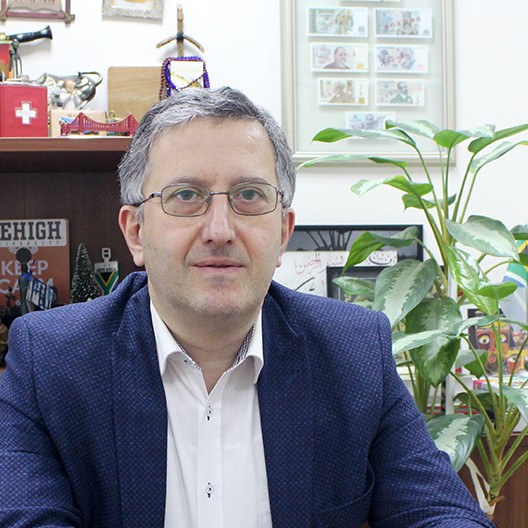
Mr. David Lezhava is Public Policy Sector Director at PMCG, and has 20 years of professional working experience in the fields of public finance and economic development, regional development, social policy, and energy policy.
As Public Policy Sector Director, he is responsible for managing PMCG’s public policy project portfolio, fundraising and collaboration with partners, clients and international development organizations, as well as development and implementation of the company’s strategy.
Prior to joining PMCG’s management, Mr. Lezhava worked as a National Project Manager on UNDP’s project “Support to Rural Development in Georgia” where he ensured effective implementation of the project.
In addition, during his time as Deputy Minister of Finance of Georgia, he handled international relations, fiscal forecasting and analytical work, and public debt management process.
Mr. Lezhava enriched his expertise in coordinating relations between international organizations and the Georgian government, while working as Advisor to the Executive Director at the International Monetary Fund, in Washington D.C. where he represented the interests of Georgian authorities, facilitated IMF program implementation in Georgia, and reviewed IMF policy documents.
As a Chief Economist, Head of Research Division, and Member of the Monetary Policy Committee at the National Bank of Georgia, Mr. Lezhava led the creation of economic models for macroeconomic forecasts and played key role in monetary and foreign exchange (FX) policy decision making.
Along with his diverse experience, Mr. Lezhava has a strong academic background. He holds a master’s degree in Development Economics from Williams College (USA) and a candidate’s degree in Physics from The Academy of Science of Georgia. He is fluent in Georgian, English and Russian.