Good governance exercised through strong and accountable public institutions, along with the rule of law based on principles of respect for human rights and civil liberties, constitutes the foundation for any economically stable and developed state. Effective public administration based on evidence-based policy-making and a citizen-centric civil service is the cornerstone of such development and we provide practical assistance to governments in various countries to help them to achieve tangible results in this respect.
By empowering civil society and increasing its participation in policy-making and implementation, we strive to strengthen the transparency and accountability of public institutions. Effective civil oversight entails active engagement of democratic institutions, governments, civil society, and the media. We work also with parliaments to enhance evidence-based law making and their oversight function.
We believe that decentralization and the enhancement of the capacities of local governments is a key factor in the sustainable development of countries and regions. Thus, we assist municipalities in Eastern Partnership countries to become drivers of economic growth, while simultaneously supporting public participation in decision-making at the local level to further improve transparency, accountability, and ultimately the effectiveness of local governments.
Public safety, peace, and security are vital components in the building of a resilient state. At the same time, in an era of hybrid threats, governments’ strategic communications are gaining more and more importance. To respond to the emerging challenges, we advise governments about effective tools of strategic communication, while more specifically we are providing assistance to the Ministry of Interior and the State Prosecution Service of Georgia in criminal justice reform.
To yield significant results, our approach involves developing a meaningful partnership with all beneficiaries and applying the concept of “co-design” during project implementation to generate ownership among beneficiaries. We focus on practical advice and the development of necessary capacities for partner institutions. Moreover, we build upon achieved results and apply best international practices to deliver progress.
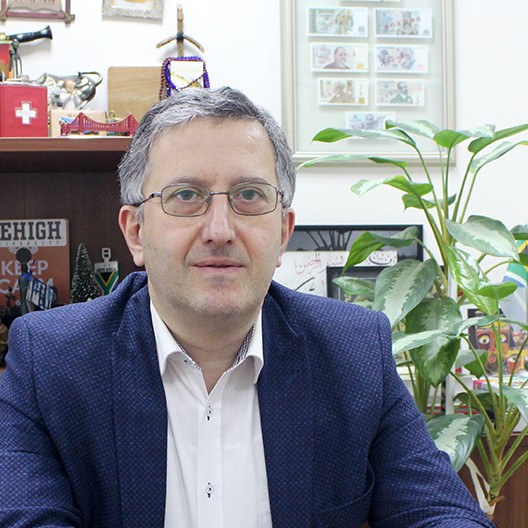
Mr. David Lezhava is Public Policy Sector Director at PMCG, and has 20 years of professional working experience in the fields of public finance and economic development, regional development, social policy, and energy policy.
As Public Policy Sector Director, he is responsible for managing PMCG’s public policy project portfolio, fundraising and collaboration with partners, clients and international development organizations, as well as development and implementation of the company’s strategy.
Prior to joining PMCG’s management, Mr. Lezhava worked as a National Project Manager on UNDP’s project “Support to Rural Development in Georgia” where he ensured effective implementation of the project.
In addition, during his time as Deputy Minister of Finance of Georgia, he handled international relations, fiscal forecasting and analytical work, and public debt management process.
Mr. Lezhava enriched his expertise in coordinating relations between international organizations and the Georgian government, while working as Advisor to the Executive Director at the International Monetary Fund, in Washington D.C. where he represented the interests of Georgian authorities, facilitated IMF program implementation in Georgia, and reviewed IMF policy documents.
As a Chief Economist, Head of Research Division, and Member of the Monetary Policy Committee at the National Bank of Georgia, Mr. Lezhava led the creation of economic models for macroeconomic forecasts and played key role in monetary and foreign exchange (FX) policy decision making.
Along with his diverse experience, Mr. Lezhava has a strong academic background. He holds a master’s degree in Development Economics from Williams College (USA) and a candidate’s degree in Physics from The Academy of Science of Georgia. He is fluent in Georgian, English and Russian.
Dr. Giorgi Khishtovani is a Research Director at PMCG. He has more than 10 years of professional working experience in public, private and non-governmental sectors in Georgia and abroad. Before joining PMCG, Dr. Khishtovani worked as the Deputy Dean of Faculty of Business Administration and Economics at Tbilisi State University (2009-2011), as a Research Fellow at the University of Bremen (2011-2014), as the Head of Research at the Institute of Development of Freedom of Information (IDFI) (2015-2016) and as the Head of Department of Grants and Programs Administration at the National Science Foundation of Georgia (SRNSF) (2015-2017).
Dr. Khishtovani has extensive experience as a researcher, trainer, consultant and project manager within the framework of various international projects conducted by the World Bank, the European Union, the Council of Europe, UNDP, GIZ and the Federal Foreign Office of Germany.
Dr. Khishtovani also has a strong academic background. He holds a PhD degree in Economics from the University of Bremen (Germany). His PhD thesis covered the topic of the transformation of governance structures in Georgia between 2003 and 2012. Dr. Khishtovani also holds an LLM degree from the University of Trier (Germany), a Master of Science degree (MSc) in Economics and Social Sciences from the University of Trier (Germany) and a Bachelor’s degree in Business and Law from the Georgian Technical University. Currently, Dr. Khishtovani is an Associate Professor and Head of Department of Finance at the Business School of Ilia State University.