Humans need to enhance their skills and knowledge to better perform their jobs and to flourish in an ever-changing world. However, the dissonance between capacities and systems or processes is ubiquitous.
At PMCG, we provide Capacity Development services to prepare employees of public organizations, private organizations, and CSOs, as well as those entering the labor market with the tools and skills needed to conduct productive and high-quality work that will guarantee organizational success. While Capacity Development comprises part of our wider efforts to help employees adapt to labor market changes, it is also delivered as an independent service.
Capacity Development Services
Training Needs Assessment
Trainings
Coaching and Mentoring
Georgia Study Tours
Before designing trainings, it is important to determine where each individual stands in terms of their required skills and competencies to ensure maximum performance and productivity in their present and/or future work. Thus, we provide a Training Needs Assessment, which takes into account specific teams and roles to ascertain the particular competencies required to meet organizational requirements.
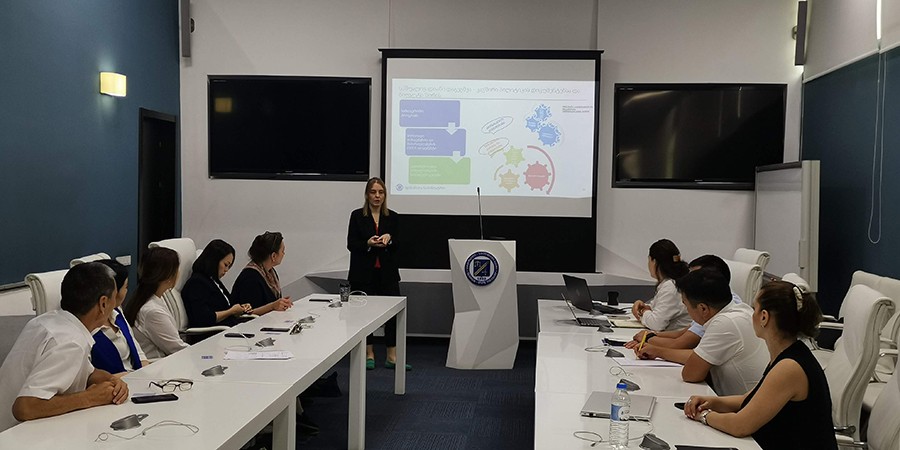
Trainings are the core of our service to strengthen existing the skills, knowledge, and capabilities of individuals and teaching them new ones as well. Meanwhile, Coaching and Mentoring represent other services guiding individuals in pursuit of their goals and helping them to reach their full potential, and to develop and grow.
When it comes to the public sector, sharing knowledge from various backgrounds is essential. Therefore, we host delegations from numerous countries in transition in Georgia and organize Study Tours to share accounts of the successful reforms undertaken in Georgia and to demonstrate best practices.
Quality delivery of such services is guaranteed by our rich hands-on experience and expansive pool of trainers, coaches, and mentors, and can also be evidenced by the achievements of our hundreds of beneficiaries through the years. While enhancing capacities of employees of different public institutions, we have also given different opportunities to the different communities. In Georgia, PMCG has delivered a training course for 250 young people from its eight municipalities on working remotely and teaching a number of e-working tools essential to telecommuting in order to advance the e-work market’s development in Georgia. The importance and quality of our work has been evidenced by many participants, including Jemal Saginadze:
“The training was a great opportunity to learn more about adapting to modern remote work and communication. We learned how to gain new skills and utilize the necessary tools and resources in order to become more productive, flexible, and adaptable to the labor market demands of our century.”
The main goal of the project is to increase the capacity of the Ministry of Economy and Sustainable Development (MoESD) of Georgia through a series of capacity-building measures to bring about effective planning and implementation of evidence-based, participatory, and accountable public policy.
The project’s primary objective is to strengthen knowledge and capacities of the Central Asia Regional Economic Cooperation (CAREC) countries regarding the design and implementation of free trade agreements (FTAs). The CAREC Program is a partnership of 11 countries and development partners working together to promote development through cooperation, leading to accelerated economic growth and poverty reduction. It is guided by the overarching vision of “Good Neighbors, Good Partners, and Good Prospects.”
The objective of the project is to support cities’ resilience during the COVID-19 pandemic by arranging capacity-building activities and targeted support in the directions of digitalization and crisis management in the southeastern Europe (SEE) region, and promoting the Connective Cities Network’s development through more active and practical involvement.
The goal of this project is to improve the digital skills and competence of rural enterprises through needs-based, tailor-made, and individually-targeted coaching. Furthermore, the project envisages fostering synergies and sustainable cooperation between rural enterprises in Khulo and Lagodekhi municipalities and the key relevant stakeholders, including local action groups (LAGs), ensuring the engagement of the relevant communities.
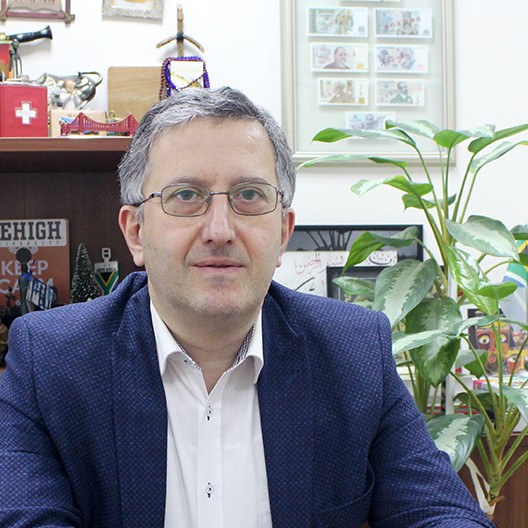
Mr. David Lezhava is Public Policy Sector Director at PMCG, and has 20 years of professional working experience in the fields of public finance and economic development, regional development, social policy, and energy policy.
As Public Policy Sector Director, he is responsible for managing PMCG’s public policy project portfolio, fundraising and collaboration with partners, clients and international development organizations, as well as development and implementation of the company’s strategy.
Prior to joining PMCG’s management, Mr. Lezhava worked as a National Project Manager on UNDP’s project “Support to Rural Development in Georgia” where he ensured effective implementation of the project.
In addition, during his time as Deputy Minister of Finance of Georgia, he handled international relations, fiscal forecasting and analytical work, and public debt management process.
Mr. Lezhava enriched his expertise in coordinating relations between international organizations and the Georgian government, while working as Advisor to the Executive Director at the International Monetary Fund, in Washington D.C. where he represented the interests of Georgian authorities, facilitated IMF program implementation in Georgia, and reviewed IMF policy documents.
As a Chief Economist, Head of Research Division, and Member of the Monetary Policy Committee at the National Bank of Georgia, Mr. Lezhava led the creation of economic models for macroeconomic forecasts and played key role in monetary and foreign exchange (FX) policy decision making.
Along with his diverse experience, Mr. Lezhava has a strong academic background. He holds a master’s degree in Development Economics from Williams College (USA) and a candidate’s degree in Physics from The Academy of Science of Georgia. He is fluent in Georgian, English and Russian.